
Hanta Virus: Symptoms, Spread, Mortality Rate and Real-World Risk
You usually do not search for hanta virus out of curiosity. Most people arrive here after a small scare. Maybe there were mouse droppings in a shed. Maybe a news story mentioned a sick traveller. Maybe someone used the words “rare but deadly,” and now you want the plain version without panic.
Here it is.
Hanta virus, more often written as hantavirus, is a group of viruses carried by some rodents. People can become infected when they breathe in dust contaminated with urine, droppings, saliva, or nesting material from infected rodents. That is the usual route. Not a dramatic bite. Not a casual walk past a mouse. More often, it is a closed space, old dust, rodent waste, and someone cleaning too quickly. The CDC describes rodent contact as the main source of exposure and recommends reducing rodent contact at home, work, or campsites.
That does not mean every mouse sighting is dangerous. It does mean you should treat rodent-contaminated spaces with respect. A broom, a vacuum, and dry dust are a bad mix.

What Is Hanta Virus?
If you came here asking “what is hanta virus?”, the answer is simple enough: it is a rodent-borne virus that can sometimes cause serious disease in humans.
Different hantaviruses behave differently. Some are linked more with kidney illness. Others, especially in the Americas, can cause a severe lung condition often called hantavirus pulmonary syndrome or hantavirus cardiopulmonary syndrome. That is the form most people worry about because breathing problems can become serious fast. The CDC notes that Hantaan and Dobrava virus infections can be severe, while Seoul, Saaremaa, and Puumala infections are usually more moderate.
You may also see Spanish searches such as virus del hanta, sintomas de virus hanta, or sintomas de hanta virus. These usually point to the same concern: how the virus spreads, what the early warning signs look like, and when a person should get medical care.
Here is a quick overview:
| Topic | Plain answer |
|---|---|
| Main source | Infected rodents |
| Common exposure route | Breathing contaminated dust |
| Main risk setting | Closed, dusty spaces with rodent activity |
| Human-to-human spread | Rare overall; Andes virus is the key exception |
| Main warning sign | Flu-like illness after rodent exposure, especially with breathing trouble |
| Best prevention | Avoid stirring up rodent waste and control rodents early |
How Hanta Virus Spread Usually Happens
The phrase hanta virus spread can be misleading if you imagine it moving like flu or COVID. For most hantaviruses, that is not the usual pattern.
The more common story is practical and ordinary. Rodents get into a shed, cabin, garage, barn, storage room, or crawl space. They leave droppings and urine behind. The place stays closed. Dust builds up. Later, someone walks in and starts sweeping, vacuuming, moving boxes, shaking fabric, or clearing nesting material. That is when contaminated particles may become airborne.
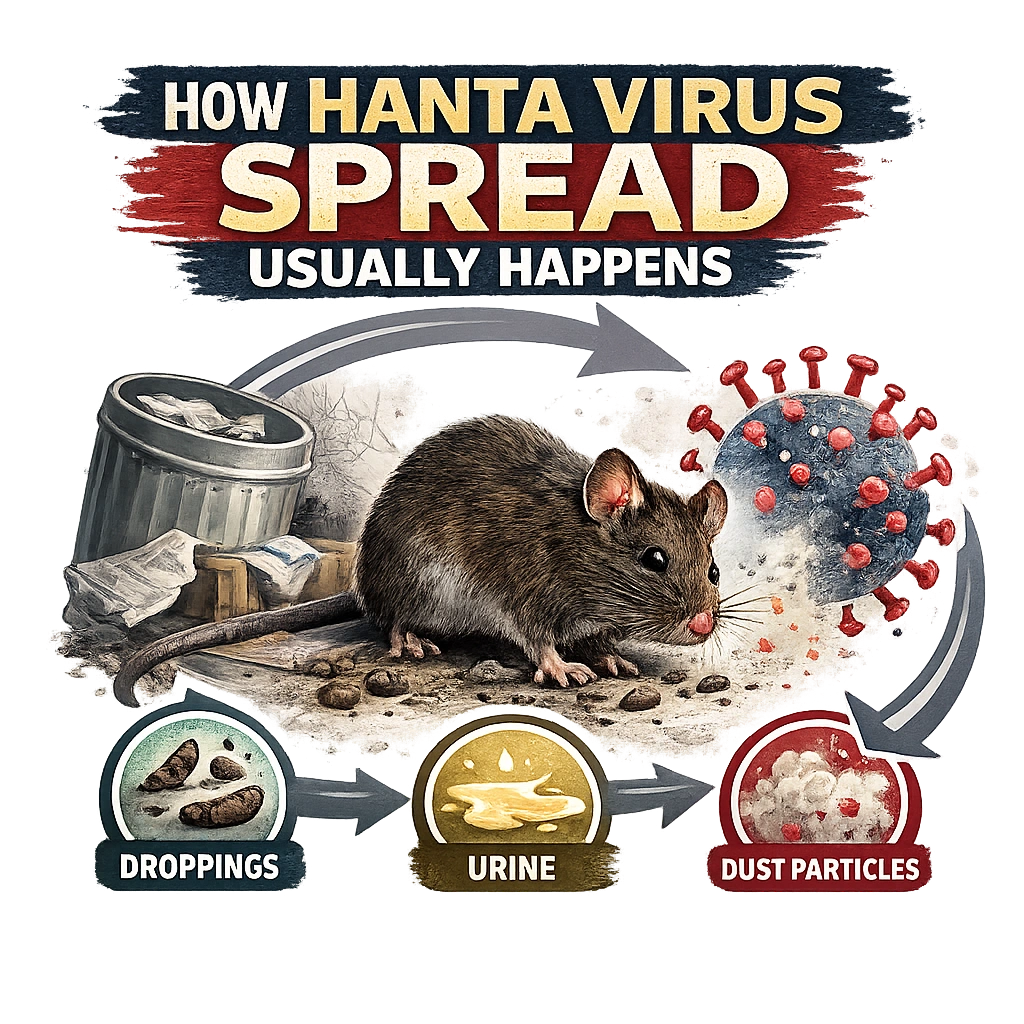
Higher-risk situations include:
- Cleaning dry rodent droppings with a broom or vacuum.
- Opening a cabin, shed, or storage room after months of little use.
- Moving dusty boxes, insulation, firewood, bedding, or old fabric with signs of rodents.
- Handling nests or dead rodents without gloves.
- Sleeping in a building where rodents have been active.
- Working in enclosed spaces with poor airflow and visible droppings.
Andes virus is different in one important way. It is the only hantavirus known to spread from person to person, usually through close contact with someone who is sick, direct physical contact, prolonged time in close or enclosed spaces, or exposure to body fluids. The CDC also says people are typically infectious only while they have symptoms.
That point matters. Most people do not need to fear casual public contact. But if Andes virus is involved, close-contact precautions become more important.
Hanta Virus Symptoms
The hard thing about hanta virus symptoms is that early illness does not always feel unusual. It may look like flu. It may look like a stomach bug. It may feel like exhaustion after travel or heavy work.
Early signs can include fever, extreme tiredness, muscle aches, stomach pain, nausea, vomiting, diarrhoea, and sometimes shortness of breath. UKHSA lists these symptoms and notes that Andes hantavirus symptoms usually appear between 2 and 4 weeks after exposure, though reports show symptoms can occur up to 40 days later.
Some people search for hanta virus symptome, using the German-style spelling, while others search in Spanish for sintomas de virus hanta. The concern is the same: what should a person watch for after possible rodent exposure?
Possible early symptoms may include:
| Symptom | What it may feel like |
|---|---|
| Fever or chills | Hot, cold, shaky, or generally unwell |
| Muscle aches | Deep soreness, often in larger muscle groups |
| Fatigue | A heavy, drained feeling that feels stronger than normal tiredness |
| Headache | Pressure or pain, often with fever |
| Nausea or vomiting | Stomach upset that may seem like food poisoning |
| Diarrhoea or abdominal pain | Digestive symptoms without a clear reason |
| Shortness of breath | A more serious sign, especially after early flu-like illness |
One symptom alone does not prove infection. A headache is common. Fever is common. Stomach problems are common. The detail that changes the picture is exposure. Did the person clean a rodent-infested space? Did they sleep somewhere with droppings? Did they sweep dry waste? Did they recently travel to an area where Andes virus is present?
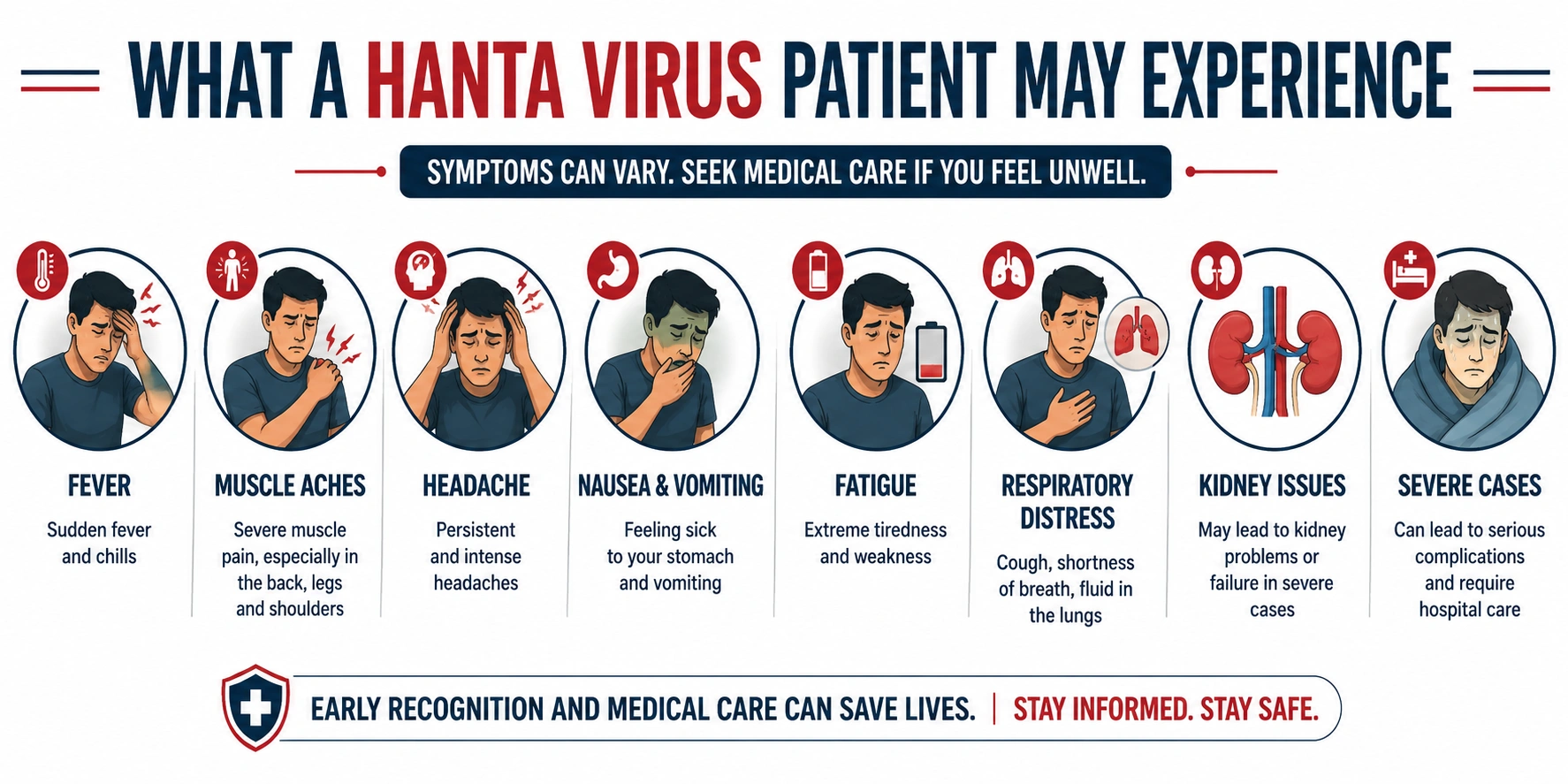
What a Hanta Virus Patient May Experience
A hanta virus patient may not look severely ill at first. That is one reason the disease can be tricky. Early symptoms may not send someone straight to hospital. They may rest at home, drink water, and assume it will pass.
The problem comes if the illness progresses. In lung-related hantavirus disease, breathing symptoms can appear after the first flu-like stage. A person may begin coughing, feel tightness in the chest, or struggle to breathe normally. At that point, waiting is risky.
If you or someone else feels ill after possible rodent exposure, mention the exposure clearly to medical staff. Do not only say, “I have a fever.” Say something more useful:
“I cleaned mouse droppings in a closed shed two weeks ago.”
That one sentence gives a doctor much better context.
There is no simple way to confirm hantavirus from symptoms alone. A healthcare professional needs the full picture: exposure, timing, symptoms, travel history, and testing where appropriate.
Hanta Virus Mortality Rate
The hanta virus mortality rate depends on the virus type, the illness form, medical care, and the country or outbreak involved. There is no single number that fits every hantavirus infection.
For some Old World hantaviruses, the CDC reports that Hantaan and Dobrava virus infections are fatal in about 5–15% of cases, while Seoul, Saaremaa, and Puumala virus infections are usually more moderate, with less than 1% dying from the disease.
For Andes virus and hantavirus pulmonary or cardiopulmonary syndrome, the concern is higher. The World Health Organization describes Andes virus as a cause of severe disease and notes that early identification, isolation of cases, contact monitoring, and standard infection prevention measures are important during outbreaks or suspected cases.
The important takeaway is not to memorize one number. It is to understand the pattern: many hantavirus infections are rare, but some forms can be severe. Fast medical attention matters when breathing symptoms appear.
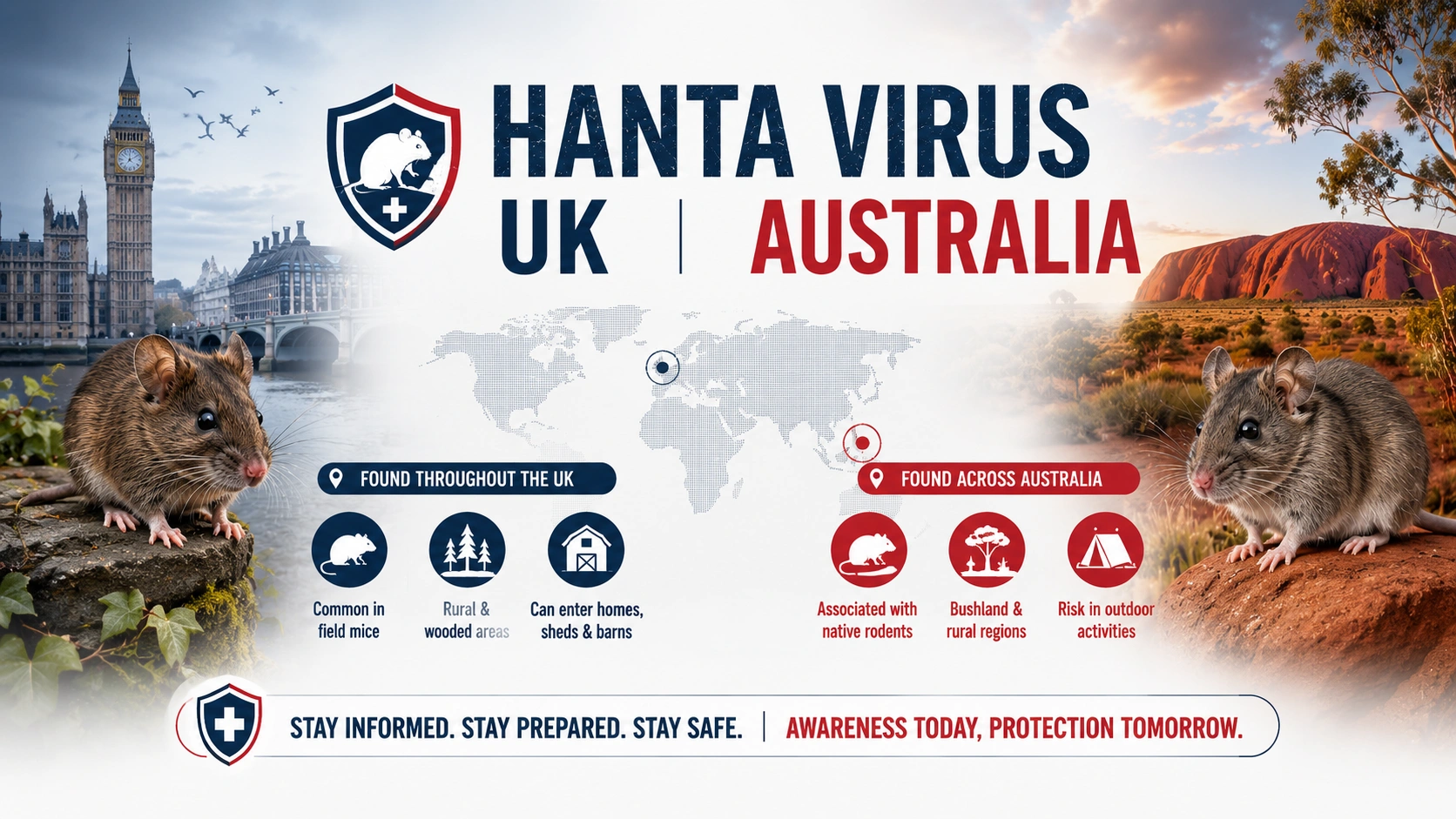
Hanta Virus UK
Searches for hanta virus UK have increased because of recent attention around international travel and a cruise ship outbreak. UKHSA published public guidance in May 2026 explaining what hantavirus is, how it is transmitted, and which symptoms to watch for. The agency lists fever, extreme fatigue, muscle aches, stomach pain, nausea, vomiting, diarrhoea, and shortness of breath as possible symptoms.
In another May 2026 update, UKHSA said it was aware of two people who had returned to the UK independently after being on board the MV Hondius, and neither was reporting symptoms at the time of that update. UKHSA also described plans for asymptomatic contacts from St Helena and Ascension Island to complete self-isolation in the UK as a precautionary measure.
For readers in the UK, the practical message is not “panic.” It is more grounded than that. Hantavirus is not a normal everyday risk for most people. But if a person has relevant travel history, possible rodent exposure, or close contact with a confirmed Andes virus case, public health advice should be followed.
Hanta Virus Australia
The search term hanta virus australia has also become more common because of recent international news. Australia’s Centre for Disease Control stated in May 2026 that the risk to Australia and the global population remained low and that there were no reports of human hantavirus infection in Australia. It also said testing is not required for asymptomatic people.
CSIRO has also noted that Australia has no recorded human cases of hantavirus, while researchers continue to study why these viruses affect different parts of the body in different infections.
That does not mean Australian travellers should ignore guidance. If someone has been in a known exposure setting overseas, especially involving Andes virus, they should follow public health instructions. For most people living in Australia, though, current public guidance describes the risk as very low.
Hanta Virus Chile
Hanta virus Chile is a more serious and specific search because Andes virus is endemic in parts of South America, including Chile and Argentina. This is the virus most associated with person-to-person spread, although that spread is still usually linked with close contact.
The CDC says Andes virus can spread through infected rodents or their urine, saliva, or feces, by touching contaminated surfaces and then touching the mouth, nose, or eyes, and through close contact with a person who is sick with Andes virus. Symptoms of HPS due to Andes virus can appear 4 to 42 days after exposure.
For travellers, that means prevention is practical: avoid rodent-infested areas, be careful with rural cabins or poorly sealed buildings, and take symptoms seriously after possible exposure. Spanish-language searches like virus del hanta, sintomas de hanta virus, and sintomas de virus hanta are especially relevant in this context because Andes virus is a public health concern in parts of the region.
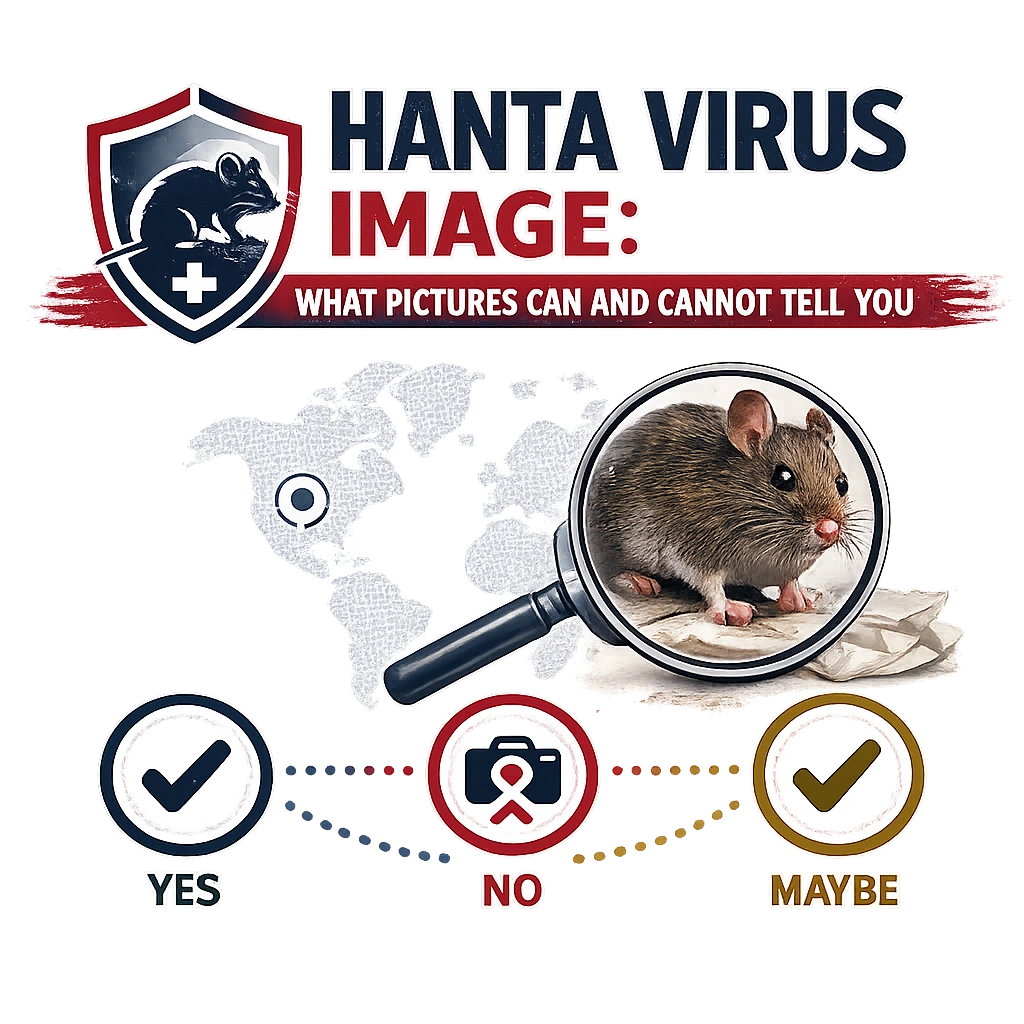
Hanta Virus Image: What Pictures Can and Cannot Tell You
People often search for a hanta virus image when they want to know what the virus, carrier rodents, or symptoms look like. Images can help with awareness, but they can also mislead.
A microscope-style image of a virus does not help you judge your personal risk. A photo of a mouse does not prove that the mouse carries hantavirus. A picture of droppings may help you notice possible rodent activity, but it cannot tell whether the droppings are infected.
A useful hanta virus image might show:
- common rodent signs in a building;
- what droppings or nesting material may look like;
- safe cleaning equipment;
- prevention steps around cabins, sheds, or storage areas.
The best image for prevention is not a scary medical graphic. It is a practical one: gloves, ventilation, disinfectant, sealed waste bags, and no dry sweeping.
When to Call a Doctor
You do not need medical care just because you saw a mouse. But you should take symptoms seriously if they appear after possible exposure.
Contact a healthcare provider if you develop fever, strong fatigue, muscle aches, stomach symptoms, dizziness, or headache after cleaning or entering a rodent-contaminated area. Seek urgent care if shortness of breath, chest tightness, worsening cough, or trouble breathing appears.
Be specific. Tell medical staff:
- where the exposure happened;
- when it happened;
- whether there were droppings, nests, or dead rodents;
- whether you swept, vacuumed, or moved dusty material;
- whether you recently travelled to Chile, Argentina, or another area where Andes virus may occur;
- whether you had close contact with a sick person linked to a known outbreak.
Clear details help more than general worry.
How to Reduce Risk at Home or While Travelling
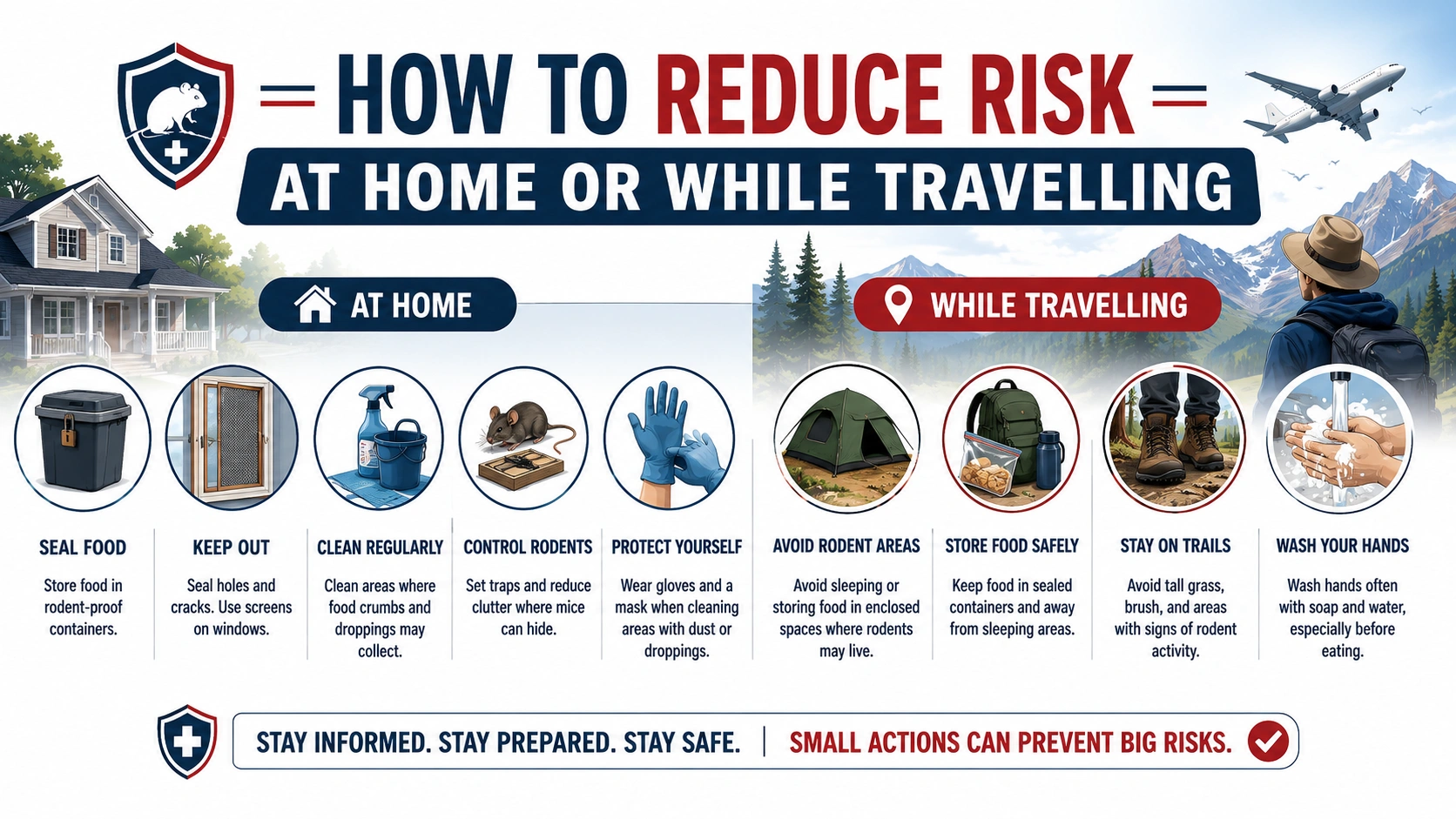
Prevention is mostly about avoiding rodent exposure. It is not complicated, but it does require patience.
Do not sweep dry droppings. Do not vacuum rodent waste. Do not shake dusty bedding or fabric in a closed room. Ventilate first. Wear gloves. Wet contaminated areas with disinfectant. Let the disinfectant work. Then remove waste carefully.
At home, seal gaps around doors, vents, pipes, foundations, and walls. Store food, pet food, and bird seed in strong containers. Keep rubbish covered. Reduce clutter in garages and sheds. Check rarely used spaces before moving things around.
When travelling, be extra careful with rustic cabins, campsites, barns, sheds, and rural buildings that have been closed for a while. If you see signs of rodents, do not sleep there until the space has been cleaned safely.
Final Thoughts
Hanta virus is rare, but it is not a topic to dismiss. The safest approach is calm and practical. Understand how exposure happens. Notice early symptoms in context. Take breathing problems seriously. Follow public health advice if travel, close contact, or an outbreak is involved.
Most people will never become a hanta virus patient. Most mouse sightings will not lead to illness. But if you open a dusty space and find rodent droppings, slow down. Do not sweep. Do not vacuum. Ventilate, disinfect, and clean carefully.
That simple pause is often the most useful prevention step.
FAQ
What is hanta virus?
Hanta virus, usually written as hantavirus, is a group of viruses carried by some rodents. People may become infected when they breathe in dust contaminated with rodent urine, droppings, saliva, or nesting material.
How does hanta virus spread?
Most infections happen through contact with infected rodents or contaminated dust. Andes virus is the main hantavirus known to spread from person to person, usually through close contact with someone who is sick.
What are common hanta virus symptoms?
Common symptoms include fever, extreme tiredness, muscle aches, headache, stomach pain, nausea, vomiting, diarrhoea, and sometimes shortness of breath.
What does hanta virus symptome mean?
“Hanta virus symptome” is usually a search for hantavirus symptoms. The spelling is different, but the user is normally looking for signs such as fever, fatigue, muscle pain, stomach symptoms, and breathing problems.
What are sintomas de virus hanta?
“Sintomas de virus hanta” means symptoms of hantavirus in Spanish. These can include fever, muscle aches, fatigue, stomach pain, nausea, vomiting, diarrhoea, and breathing difficulty.
What is the hanta virus mortality rate?
The mortality rate depends on the virus type. Some hantaviruses have low fatality rates, while severe lung-related forms, especially those linked with Andes virus, can be much more dangerous.
Is there hanta virus in the UK?
The UK has public health guidance on hantavirus, especially after recent travel-related concerns. For most people in the UK, everyday risk remains low, but relevant travel or exposure history should be taken seriously.
Is hanta virus in Australia?
Australian public health authorities stated in May 2026 that the risk remained low and that there were no reports of human hantavirus infection in Australia.